
When comparing Jabra and Plantronics headsets, users are often looking for clear sound, comfort, and reliable features for daily use. Both brands have a strong reputation and offer a wide range of options suited for office work, calls, and even music. Their products are used around the world, making them common choices for professionals and everyday users alike.
 Jabra is known for delivering strong sound quality and modern designs, while Plantronics stands out for comfort and advanced noise-cancellation. The best choice depends on what matters most to the buyer—some may prefer the sleek feel and audio of Jabra models, while others value the prolonged comfort and noise reduction Plantronics can provide.
Shoppers will find both brands offer wired and wireless headsets, along with headset models at different price points. There’s no single answer, as each excels in a specific area, so the decision comes down to individual needs and preferences.
Jabra vs Plantronics: Brand Overview
 Jabra and Plantronics are leading names in the headset industry, each with a long history of innovation and quality. Both brands deliver products aimed at different users, from office workers to call centre staff and everyday consumers.
Company History and Reputation
Jabra is a Danish company that is now part of GN Group, a company with over 150 years in audio technology. Jabra started focusing on wireless technology early, leading to their strong presence in Bluetooth and wireless headsets today. Their reputation is built on sleek design, sound quality, and reliable products for business and personal use.
Plantronics, now known as Poly after merging with Polycom, is an American brand with roots going back to the 1960s. Plantronics first gained attention by supplying headsets for NASA missions, including the Apollo moon landing. The brand is known for comfort, durability, and advanced noise-cancelling technology. Plantronics has a strong following among office workers and commercial users who need reliable performance every day.
Both brands are trusted by businesses worldwide and have earned awards for quality and innovation. Jabra tends to focus more on audio clarity and smart features, while Plantronics is often chosen for long-wearing comfort and robust microphones.
Headset Range and Target Markets
Jabra offers a wide range of headsets, including corded and wireless models. Their products cover personal use, call centres, and unified communications. Popular products include the Jabra Evolve and Jabra Elite series, known for their modern design, sharp audio, and easy controls. Jabra also targets fitness fans with models like the Jabra Sport series.
Plantronics also makes both corded and wireless headsets, with many models designed for call centres and office use. Their Voyager, Blackwire, and EncorePro lines are well-regarded for comfort and professional-grade microphones. The brand also makes consumer Bluetooth headsets for those needing hands-free calls on the go.
Both brands focus on noise reduction and connectivity, but Jabra often stands out for integration with modern communication apps, while Plantronics is best known for ergonomic design and long-term comfort.
Summary Table:
| Feature | Jabra | Plantronics (Poly) |
|---|---|---|
| Design Focus | Modern, stylish | Ergonomic, comfort |
| Known For | Sound quality, wireless tech | Noise cancelling, durability |
| Popular Series | Evolve, Elite, Sport | Voyager, Blackwire, EncorePro |
| Typical Users | Office, personal, fitness | Office, call centres, mobile |
Comparing Sound Quality and Performance
 When it comes to sound quality and performance, both Jabra and Plantronics offer advanced features that appeal to users who need reliable audio for calls and music. Each brand takes a different approach to microphone technology and noise cancellation, resulting in clear benefits depending on individual priorities.
Microphone Technology
Jabra headsets often make use of multiple microphones positioned at different points on the headset. This design aims to reduce background noise and capture the user’s voice more accurately during calls. Technology like beamforming helps the microphones pick up the speaker’s voice while cancelling out sounds from other directions.
Plantronics headsets, especially in the Voyager series, use Adaptive Digital Signal Processing (DSP) to enhance microphone performance. They also incorporate multiple microphones but stand out for comfort during long calls, as the microphones are strategically placed for natural speech. The noise-cancelling boom mics on many Plantronics models help achieve a more natural and clear sound.
Comparison Table
| Brand | Microphone Features | Best For |
|---|---|---|
| Jabra | Multi-mic, beamforming | Noisy environments |
| Plantronics | Adaptive DSP, boom mic, comfort | Extended conversations |
Audio Clarity and Noise Cancelling
Jabra delivers strong audio clarity, especially in their Evolve and Talk series. These headsets are known for clear voices on both ends of the call and have HD audio standards. Many models come with active noise cancellation (ANC), which electronically blocks background sounds, creating a distraction-free experience for the user.
Plantronics, now known as Poly, places a big focus on comfort and advanced noise-cancelling. Their headsets typically feature soft ear cushions and are designed for hours of use. The noise-cancelling technology in models like the Voyager Focus and Blackwire series excels at reducing both low and high frequency sounds. This makes them effective in busy offices or open environments.
Key Features List
- Jabra: HD audio, active noise cancelling, detailed sound
- Plantronics: Advanced noise cancelling, comfortable fit, stable audio quality
Both Jabra and Plantronics offer reliable sound but use different technologies to achieve clear calls and minimise distractions. This makes both suitable for work calls, depending on what the user values—clarity or comfort.
Corded Headsets: Features and Innovations
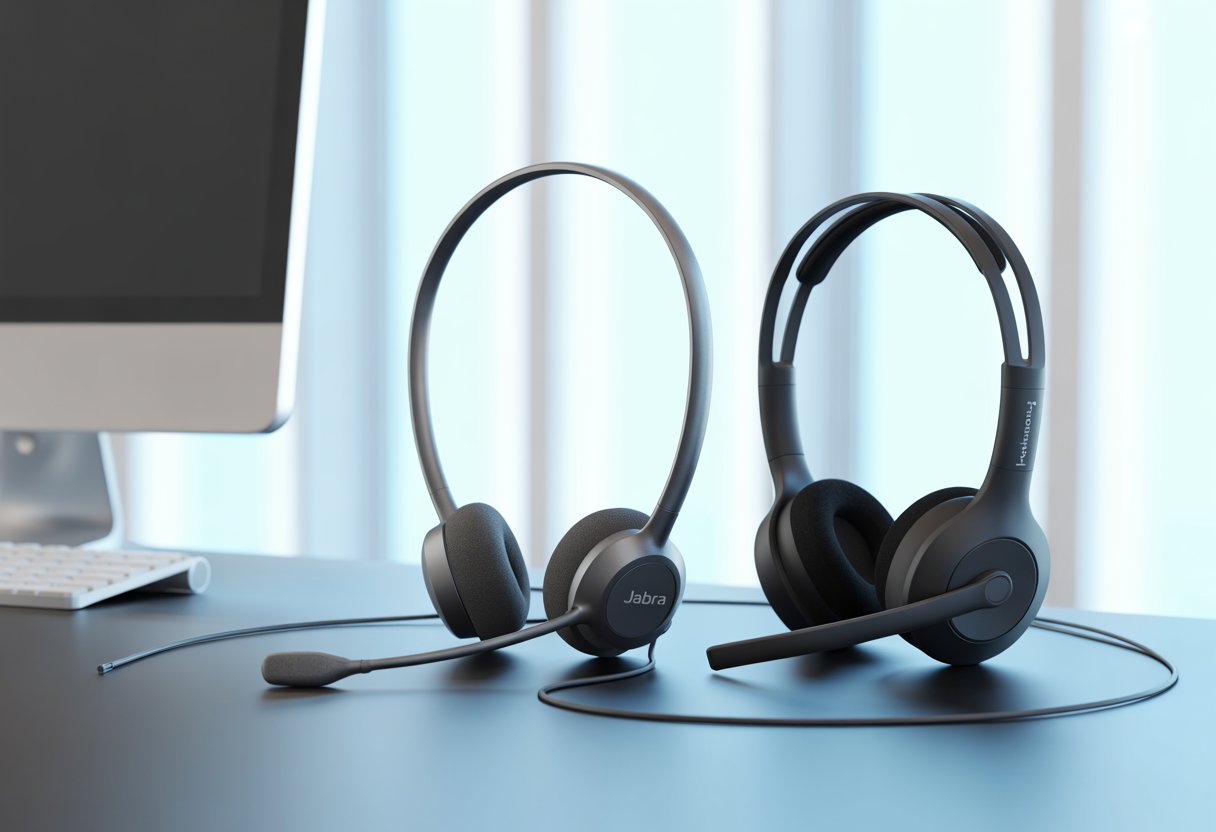
Corded headsets remain a popular choice for those wanting constant, high-quality audio without needing to recharge. Jabra and Plantronics both offer unique technologies and designs to address comfort, sound performance, and durability.
Comfort and Build Quality
Jabra’s corded headsets often feature lightweight frames and soft ear cushions designed for long-term wear. The Jabra Biz series is particularly well-known for offering a Kevlar-reinforced cord, which helps prevent damage from everyday bending and pulling. Jabra also uses air-shock microphones to cut down on breathing noises, making calls clearer for both sides.
Plantronics headsets are recognised for their exceptional comfort. Their models are usually lighter, and many use plush padding for extra support. Adjustable headbands and rotating microphone booms come standard, so users can achieve a comfortable fit throughout the day. For those working long shifts, this focus on ergonomics helps reduce fatigue and discomfort.
Popular Corded Headset Models
A few standout models from both brands represent what is best about corded headsets today:
| Brand | Model | Key Features |
|---|---|---|
| Jabra | Biz 2300 | Kevlar cord, air-shock mic, 360° spin boom |
| Jabra | Biz 1500 | Lightweight, basic noise-cancelling |
| Plantronics | EncorePro 510 | Ultra-light, noise-cancelling mic, flexible fit |
| Plantronics | HW261N | Dual ear, soft ear cushions, reliable build |
Each model is designed for consistent office use, focusing on voice clarity and ease of use. Jabra headsets tend to lean on extra durability, while Plantronics focuses on fit and comfort as a priority. Both brands support popular business communication systems.

Wireless and Bluetooth Options
Jabra and Plantronics both offer a broad range of wireless and Bluetooth headsets for different needs. The brands compete closely, providing practical features for mobile use, office work, and long battery life.
Bluetooth Headsets for Mobility
Bluetooth headsets are ideal for people who need to move while talking on the phone. Jabra and Plantronics both have strong options for mobile professionals. Jabra is often praised for its sleek, compact designs like the Jabra Elite 65t and Jabra Talk 45. These models fit in the ear and let users listen to music or take calls without wires.
Plantronics (now branded as Poly) also leads in this space. The Plantronics Voyager series, such as the Voyager 5200, is well-known for comfort and voice clarity. Many of these Bluetooth headsets include wind noise reduction and multi-device pairing, making them useful for outdoor and travel use.
Both brands use Bluetooth 4.0 or 5.0 and offer good connection range. People can stay connected even when walking away from their desks. For someone who is often on the move, either Jabra or Plantronics can meet the need for reliable, wireless communication.
Wireless Connectivity and Battery Life
Wireless headsets need strong connectivity and long battery life. Jabra’s wireless headsets, like the Engage 65, connect to two devices at once and use DECT or Bluetooth for stable connections. This is helpful in busy offices with many devices nearby.
Plantronics wireless headsets, such as the Poly Voyager Focus 2, also stand out for stable connections and ease of switching between computer and phone. A typical wireless headset from either brand lasts 10–13 hours per charge. Standby time can reach several days, depending on the model.
Fast charging is another useful feature found in many Jabra and Plantronics models. Users can get several hours of talk time from just 15–30 minutes of charging. This is practical for those with long workdays or back-to-back calls.
Top Wireless Models
Some wireless headset models are especially popular. The Jabra Engage 65 offers a lightweight frame, directional noise cancellation, and up to 13 hours of battery. It is DECT-based, giving better range—up to 150 metres in open areas. For those who use softphones or desk phones, this is a strong choice.
The Plantronics Voyager Focus 2 delivers active noise cancellation and up to 19 hours of talk time. It connects to computers and mobile devices, switching seamlessly as needed. The Voyager 5200 is another top-seller, particularly for mobile users who want a mono Bluetooth headset.
Both brands provide models with busy lights, mute alerts, and easy-to-use controls. Customers can compare Jabra and Plantronics by looking at their comfort, feature sets, and the specific use cases for each model.
| Model | Type | Max Range | Battery Life | Key Features |
|---|---|---|---|---|
| Jabra Engage 65 | DECT Wireless | 150 metres | 13 hrs | Dual connection, very lightweight |
| Plantronics Voyager Focus 2 | Bluetooth | 30 metres | 19 hrs | ANC, connects to multiple devices |
| Plantronics Voyager 5200 | Bluetooth | 30 metres | 7 hrs | Wind noise reduction, comfort fit |
| Jabra Elite 65t | True Wireless | 10 metres | 5 hrs (buds) | Music + calls, pocket-sized charging |
| Plantronics CS540 | True Wireless | 120 metres | 7 hrs | Noise reduction, Single Ear |
Each of these wireless and Bluetooth headsets has options for specific environments, whether in an office, at home, or on the go.
Choosing the Best Headset for Your Needs
Picking a headset often comes down to specific use cases. Comfort, sound quality, and features matter a lot, especially when comparing Jabra and Plantronics models.
Workplace and Call Centre Suitability
For office work and call centres, reliability and ease of use are essential. Both Jabra and Plantronics headsets offer strong performance, but there are key differences. Jabra usually leads in active noise cancellation, making it easier to focus in busy environments. Their wired headsets are also praised for durability and clear microphone quality.
Plantronics headsets are often chosen for their comfort, especially when worn for long shifts. Advanced noise-cancelling microphones and lightweight designs make them suitable for call centre staff who need to stay comfortable throughout the day. Both brands support multiple wearing styles like on-ear, over-ear, and in-ear.
Here is a quick comparison:
| Jabra | Plantronics | |
|---|---|---|
| Noise Cancellation | Advanced (multiple models) | Strong (good for office) |
| Comfort | Good, especially wireless | Excellent, lightweight |
| Wired Options | Yes | Yes |
| Wearing Styles | Multiple | Multiple |
IT support and easy integration with phones and computers are also strengths for both brands.
Personal Use and Portability
For personal use, portability and battery life are more important. Jabra’s wireless headsets and earbuds stand out for their compact design, offering up to several hours of use per charge. Their cases are generally smaller, making them easy to carry in a pocket or bag.
Plantronics is competitive with models like the Voyager and Explorer series, which are known for secure fit and strong microphones, even on the go. Many Plantronics wireless models offer multipoint connectivity, letting users switch between devices quickly. Wired headsets are lighter and good for those who want plug-and-play simplicity.
Noise isolation for travelling and calls outdoors can be found in both brands, but Jabra has a slight edge in active technology. When looking at battery life, charging case size, and ease of switching devices, personal preferences should guide the final choice.

